


As the US equity markets make new highs, many investors are wringing their hands over the "narrowness" of the market. (Yes, the advance has been led by a handful of mega cap tech stocks). Other investors are still on the sidelines, worried about overvaluation, commercial real estate problems, political uncertainty and whatever flavor of the day that media companies decide will fan the flames of concern -- and drive clicks and ratings.
Yep. Things are bad in some places. They always are, because that's reality. That's life.
But which of these concerns actually impacts companies? What will affect their earnings and their long-term growth rates?
As the graph below suggests, for a long-term investor, those things are largely noise.
Look at the graph again. Are you going to bet against this history -- deciding that the future will be completely different than the past and that gold or cash will outperform stocks over the next decade?
Certainly, the lure of 5% risk-free money market returns is darned tempting. That is, until the interest rate cycle turns towards easing, and those 5's become 4's and 3's. Where will stocks and bonds be when the rate cycle turns so strongly in their favor?
One certainly shouldn't assume that it's all smooth sailing. After all, volatility is an integral part of investing. And we should expect more of it as we approach another presidential election. But the sidelines are a hard place from which to make long-term money. So, find the asset mix that suits your temperament (and your objectives) and stick with it. The evidence that it will work is strongly on your side.
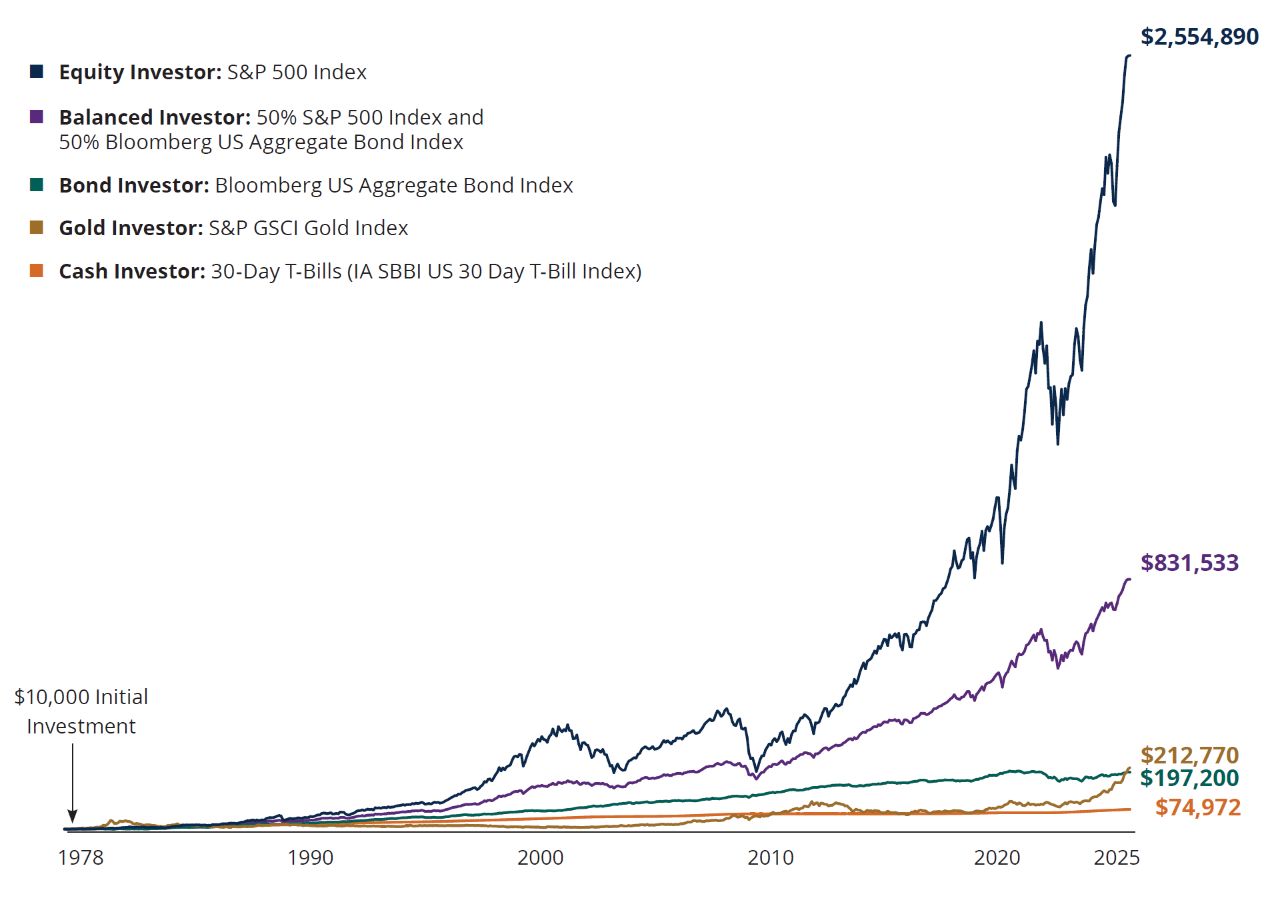
Source: Hartford Funds